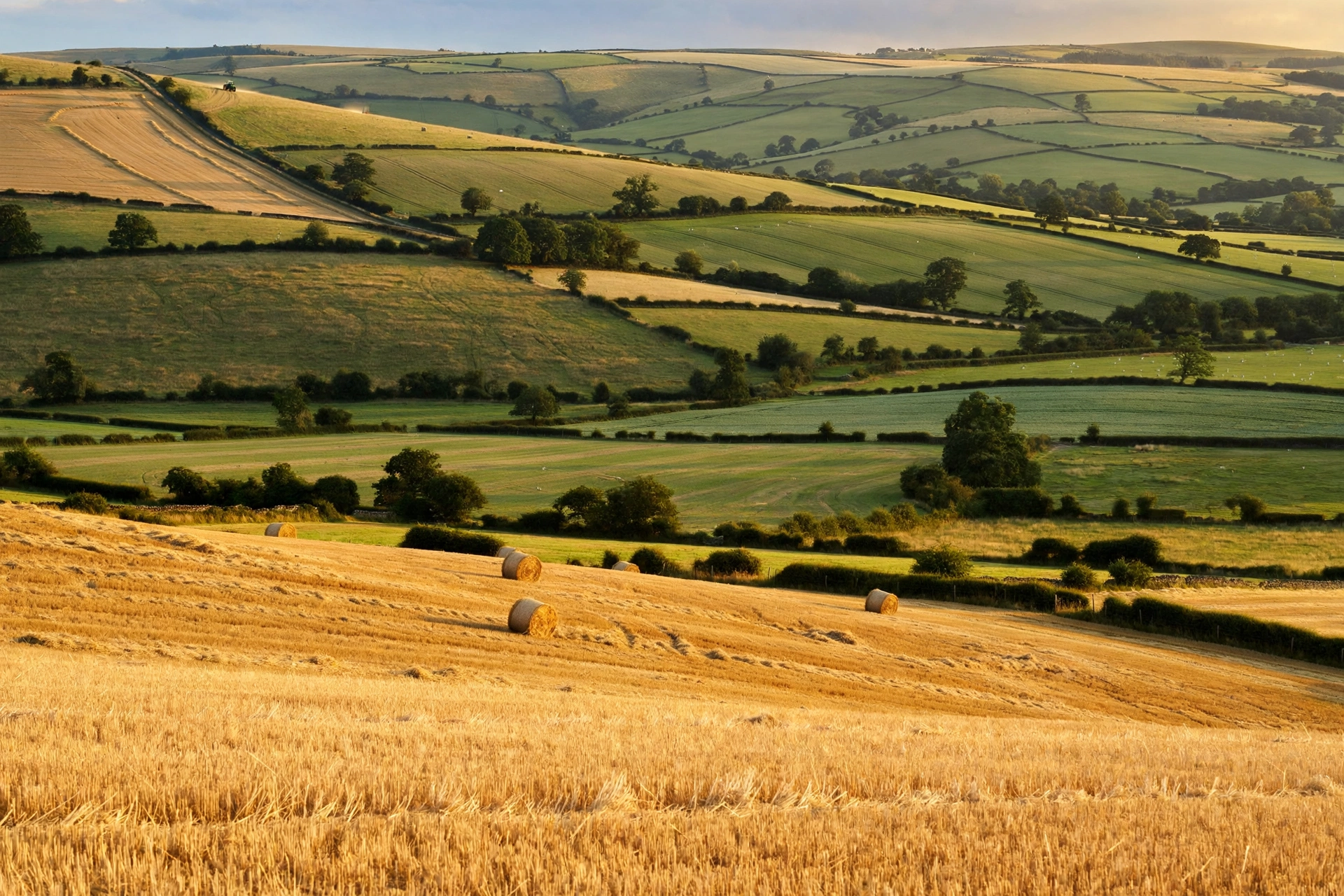
Freshways, one of Britain's biggest liquid milk processors, is cutting the price it pays dairy farmers by 7p a litre from 1 December 2026, taking its base price to 29.4p a litre. The cut almost wipes out the 9p a litre in increases Freshways introduced across September and October to support farmers after the hot, dry summer. "This is hugely disappointing at a time when confidence in the sector is already at rock bottom," said Ian Harvey, a dairy farmer and chair of the National Farmers' Union's dairy board. "Milk is leaving the farm at a loss."
Harvey farms a family partnership in north Cornwall, milking 160 Holstein cows and some Ayrshires. His own milk is processed locally into cheddar, so the Freshways cut does not hit him directly — but as NFU dairy board chair he speaks for the producers it does hit. "Like all farmers, dairy producers need confidence to plan, invest and grow their businesses," he said. "Sudden and substantial price reductions undermine that confidence." The announcement, first reported in early November 2026, is the sharpest example this year of the price squeeze: what farmers are paid, and whether it covers what it costs to produce. That is a different question from what shoppers pay at the till — the subject of a separate article on this site — although the two are connected.
The cut, and what it reverses
Freshways supplies packaged milk to small shops, cafes, hotels and wholesalers. It raised its standard litre price by 3p in September and by a further 6p in October, taking the rate paid to supplying farmers to 38p a litre. The December cut takes the base price to 29.4p, although a 1p sustainability bonus and a 0.6p volume bonus bring the payment to 31p a litre for most suppliers, according to Farmers Weekly. Managing director Bali Nijjar said the expected improvement in dairy markets had not materialised, while the company's costs had risen, and that selling prices had "not moved to reflect" the autumn increases.
The timing is what shocked producers. "We could possibly see an adjustment coming," Harvey said, "but to move the price by such a big amount, rather than phasing it over two to three months, is hard for the farmers to cope with." Dairy market analyst Chris Walkland described the cut as "brutal", and warned that further cuts in January could not be ruled out if commodity markets failed to recover.
Freshways was not the only buyer moving. Arla Foods, one of the UK's three largest milk processors alongside Müller and First Milk, cut its standard milk price by 0.45p a litre for November, to 40.41p, while its organic rate held at 58.25p. Müller told its farmers they would receive 37.5p a litre from 1 November, with no change for December, and most other major buyers held their December prices. The contrast is the point: the same milk, in the same month, is worth 29.4p from one buyer and 40.41p from another, depending on the contract a farmer signed.
The national picture behind one cut
The Freshways cut landed on a market already falling. The Department for Environment, Food and Rural Affairs put the UK average farmgate milk price in September 2026 at 38.45p a litre — 16% below September 2025. December 2025 deliveries averaged around 35.6 million litres a day, 4.8% above the previous year, according to the Agriculture and Horticulture Development Board (AHDB), and total British production for 2025/26 is forecast at a record 13.05 billion litres. Wholesale butter averaged £3,600 a tonne in January 2026, having lost more than half its value since its peak, AHDB reported.
The squeeze is visible in the gap between the farm gate and the shelf. Tesco, Sainsbury's, Morrisons and Asda recently raised the price of a four-pint bottle of milk by 10p to £1.75 — just under 44p a pint, or about 77p a litre — at the same time as the price paid to some farmers was falling towards 29p. When the shelf price rises and the farmgate price falls in the same month, farmers ask, with reason, where the difference is going.
The cost side makes the arithmetic worse. The Dairy Group, reporting through Scotland's Farm Advisory Service in January 2026, put the average cost of milk production at 48.5p a litre for 2024/25, with a forecast of 49.2p for 2025/26. Those are Scottish figures, and costs vary by farm — but they explain Harvey's blunt summary that milk is leaving farms at a loss. Feed, fuel, fertiliser, veterinary care, labour and machinery have all become more expensive, and a summer drought in 2026 added to the strain.
Fewer farms, more milk
The structure of the industry is changing under the pressure. The NFU represents 6,850 dairy farmers, down 2.3% year on year to April 2026, and the British milking herd stands at 1.59 million, 2% down on 2025. AHDB's lead dairy analyst, Susie Stannard, has pointed out that British dairy farming has fallen below 7,000 dairy farms for the first time in history — while still producing record output.
Some major retailers, including Tesco and Sainsbury's, have pledged to base payments to their farmers on production costs through dedicated supermarket milk pools. Those aligned contracts held steady in early 2026 while processor-discretionary deals fell — the difference between a price linked to what it costs to produce milk and a price set by the market on the day. For farmers outside those pools, there is no such floor.
What has changed, and what has not
There have been efforts to improve fairness. The Fair Dealing Obligations (Milk) Regulations 2024 require milk contracts to explain how prices are calculated, and the Agricultural Supply Chain Adjudicator can hear complaints where that transparency is missing. The Groceries Code Adjudicator oversees the code governing how large retailers treat suppliers. But the new rules have not yet changed the basic balance of power: a farmer with one buyer and a perishable product has little room to negotiate, and the Freshways cut — announced at once, not phased — is a reminder of how quickly terms can change.
Farmers accept that costs have risen for everyone in the chain, and that supermarkets compete hard on price for shoppers who are themselves under pressure. What they question is whether the burden is shared fairly — and whether a system in which the farmgate price can fall 7p in a month while the shelf price rises 10p on four pints is one that can keep British farms in business.
Defra's next monthly milk-price update is due on 26 November 2026. It will show whether the September average of 38.45p has fallen further — and whether the Freshways cut is an outlier or the start of a wider slide. For the farmers supplying Freshways, the answer matters less than the date already fixed: 1 December, when 7p a litre disappears from every litre they produce.