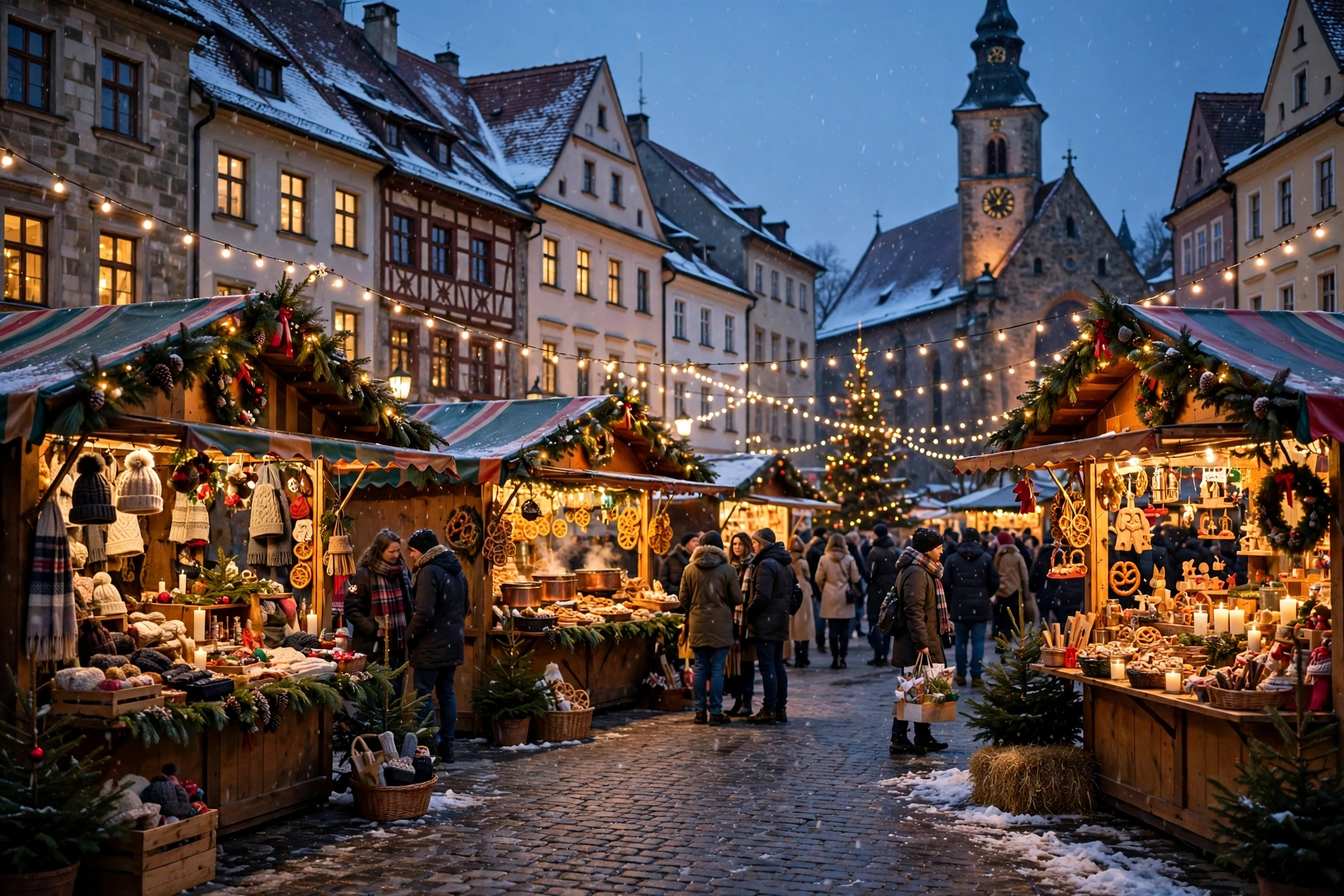
Step off the train in Birmingham in November and the city centre already smells of roasted almonds and mulled wine. The Frankfurt Christmas Market fills the streets with German-style stalls, food and drink stands and craft traders. Birmingham's market runs from 5 November to 24 December 2026, one of the earliest openings and one of the longest runs, and it shows what every other market on this route is trying to balance: a festive atmosphere that supports traders, against streets that still have to work for everyday shoppers.
The scale of the Birmingham opening is the season's first hard fact. Councillor Deborah Harries, Birmingham City Council's Cabinet Member for Culture, said as the market returned on 5 November: "It is one of many festive events taking place in Birmingham which bring visitors to the city from far and wide, and is a major boost to our visitor economy — attracting up to 5 million people each year." Around 4.5 million customers used Birmingham New Street station during last year's Christmas market period, according to Chiltern Railways.
What those visitors find is the largest authentic German Christmas market outside Germany and Austria, its stalls lining New Street and Victoria Square with hand-blown glass ornaments, wooden toys, bratwurst, pretzels and stollen. It is free to enter; a weekday visit is far more enjoyable than a Saturday afternoon crush. The neighbouring Christmas in Cathedral Square, which also runs from 5 November to Christmas Eve, adds crafts and a bandstand around St Philip's Cathedral.
Where markets once opened in late November or early December, several now begin in the first half of November, giving visitors more weekends to attend and traders more trading days. Supporters say the longer season helps to manage crowds and gives small businesses a longer window to earn income before Christmas. Critics, including some residents, argue that the festive season can feel stretched too thin, and that town centres given over to market stalls for many weeks can become harder for everyday shoppers to navigate. Councils say they work with traders and residents to strike a balance.
Edinburgh: the capital's long winter season
From Birmingham, the season heads north to Edinburgh, where the Christmas markets run from 14 November 2026 to 3 January 2027, combining market stalls with rides, shows and festive attractions in the heart of the Scottish capital. The length of the Edinburgh season matters, because it stretches past Christmas itself into the New Year, when many other markets have already closed. The pre-Christmas weeks are about shopping and gifts, while the days after Christmas lean more towards attractions and a winter break. The stalls sell Scottish crafts, jewellery, food and gifts, centred on East Princes Street Gardens. Book accommodation early — Edinburgh's hotels fill up fast in December.
Bath: short, intense and Georgian
Bath offers the opposite shape of season. Its market runs from 26 November to 13 December 2026, a shorter but intensely popular season in the city's Georgian streets. The compression is the point: fewer days, the same demand, and streets that feel fuller because the season does not have weeks to spread itself across. That makes Bath a strong argument for the weekday visit. In a short-season market, the difference between a Saturday afternoon and a Wednesday morning is the difference between queuing for every food stall and walking straight up to one. The market focuses heavily on local and regional makers — jewellery, ceramics, textiles, food and drink from the South West — and feels more like a craft fair than a funfair.
Manchester: the longest season in the country
Manchester's Christmas Markets run from 6 November to 22 December 2026, with the main sites at Albert Square and Cathedral Gardens continuing to 3 January 2027, giving the city one of the longest festive seasons in the country. The split matters for planning: the wider market closes before Christmas, while the two main sites carry on into the New Year. A visitor in the last week of December is therefore not visiting the same Manchester market as a visitor in late November, and should check which sites are still open before travelling. For traders, that long season is both an opportunity and a strain. A market pitch provides a shop window many small businesses could not otherwise afford, a chance to meet customers face to face, and a vital source of income before the quieter months of January and February. Manchester's markets are known for their food: German sausages, Dutch pancakes, Spanish paella and Yorkshire pudding wraps sit alongside mulled wine and hot chocolate.
London: Hyde Park on a different scale
In London, Hyde Park Winter Wonderland runs from 19 November 2026 to 3 January 2027, offering a vast seasonal attraction that combines markets, rides, shows and ice skating. The scale is the story here: this is not a town-centre market tucked into existing streets but a seasonal site built to absorb very large crowds. Several attractions are ticketed, so booking ahead is wise. The Southbank Centre Winter Market, along the Thames, is smaller and more relaxed: wooden chalets selling crafts and street food, with views of the river and the city lights.
York, and the smaller markets beyond
The tour ends in York, where the Christmas Market runs from 12 November to 21 December 2026, bringing stalls and festive food to the historic streets around the city centre. York closes before Christmas, like Birmingham and Bath, and its historic streets give it a different feel again from the purpose-built scale of London or the long New Year tail of Edinburgh and Manchester. York's St Nicholas Fair, in the Shambles and Parliament Street, is one of the most atmospheric of the smaller markets, with medieval streets dressed for Christmas. Winchester's Cathedral Christmas Market, in the cathedral close, is renowned for its setting and its emphasis on local makers. If the big-city markets feel overwhelming, a smaller market in a historic town can be the better festive day out — but check the market's own page for confirmed opening times, because markets can change details at short notice.
Carol singing, school choirs, charity collections and community events often run alongside the commercial stalls, giving markets a local character that distinguishes one town from another. Most stalls take cards, but a few smaller traders are cash-only — bring cash as well as cards.
Before you set off
- Check the market's own page for confirmed opening times and whether timed entry or advance booking applies, rather than relying on last year's dates.
- Pick a weekday or a late-November date if you can, when the stalls are the same and the queues are not.
- Travel by public transport or park-and-ride where that is an option, and allow extra time for the journey home.
- Put money towards local and independent stalls where you have the choice, since that is the spending that stays in the town.
- If you are travelling to Birmingham by train, note that no trains will serve Birmingham New Street on Christmas Eve, 24 December, because of major engineering work, with no trains at the station until services resume on Tuesday 29 December.