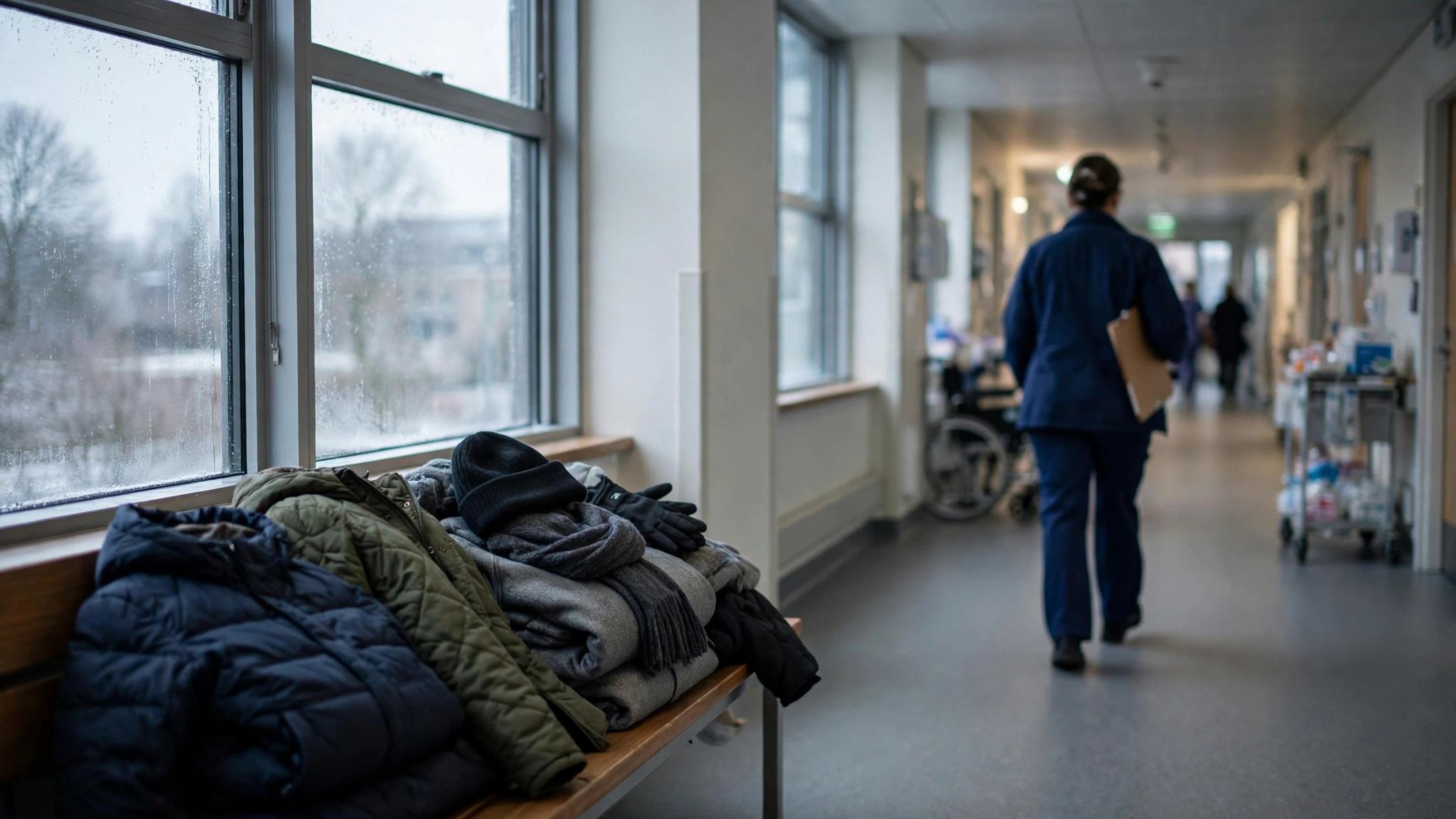
Flu is rising in England — from a low base, and earlier than usual. The UK Health Security Agency's national flu and COVID-19 surveillance report, published on 5 November 2026 and covering the week of 26 October to 1 November, found influenza "circulating at low levels" but with several indicators moving up. Laboratory test positivity rose to 7.6%, from 6.8% the previous Sunday, and the weekly hospital admission rate for flu climbed to 2.83 per 100,000 people, up from 2.51 the week before. Emergency department attendances for flu-like illness increased slightly and were above the level expected for the time of year. UKHSA has issued a briefing note to the NHS that flu activity is now above baseline levels.
That is the measured version of the headline, and it matters. This is not yet a bad flu winter. Intensive care admissions for flu fell slightly, to 0.09 per 100,000, and stayed at baseline. GP consultations for flu-like illness actually eased a little, to 6.2 per 100,000 registered patients, from 6.5 the week before. The question is how steep the climb gets.
The vaccination gap the NHS is trying to close
The second half of the same UKHSA report is the one that should worry planners most. Vaccine uptake is running behind last season in almost every group. Among people aged 65 and over, 59.1% had been vaccinated by the end of week 44, compared with 61.5% at the equivalent point last year. Among adults under 65 in clinical risk groups, uptake was 27.9%, against 28.9% last year. For two-year-olds it was 33.3%, against 34.2%, and for three-year-olds 33.1%, against 34.3%. Pregnant women were the exception, at 31.1%, up from 29.7%.
The overall numbers are still large. More than 10 million flu vaccinations had been delivered in England by 22 October 2026, including 2.7 million in that week alone, according to data released by the Department of Health and Social Care that day. But millions of eligible people had still not come forward, and the programme's own ambition is demanding: NHS England's 2026/27 flu programme aims to meet or exceed the World Health Organization target of 75% uptake among adults aged 65 and over, with the vast majority of vaccinations completed by 30 November. The programme runs until 31 March 2027, but protection takes around two weeks to build, so a jab taken in January arrives after much of the risk has already passed.
Health Minister James Frith, announcing the figures on 22 October, said: "Vaccines save lives. It has never been easier to find out if you are eligible and get vaccinated, helping protect yourself and reduce pressure on the NHS during the winter season." Dr Amanda Doyle, NHS National Director for Primary Care and Community Services, was blunter about the season ahead: "We are expecting this winter to be tough, but flu vaccines are a vital way for you to avoid becoming really ill and hospitalised, so please do book your flu jab as soon as possible."
The stakes are not abstract. UKHSA estimates that flu vaccination prevented around 100,000 hospitalisations and 7,000 deaths in England last winter. The same government announcement noted that around 2,200 deaths were associated with cold weather last winter. Chief Medical Officer Professor Chris Whitty added: "Flu can be a serious illness for vulnerable people, and life-threatening for some. It is important that those eligible for free NHS flu vaccines get vaccinated."
Who can get a free jab, and when
The 2026/27 programme opened on 1 September 2026 for children, pregnant women and some other adults, and on 1 October for everyone else who is eligible. Free vaccination is offered to people aged 65 and over, adults under 65 with certain long-term health conditions such as asthma, diabetes or heart disease, people in long-stay residential care homes, carers receiving Carer's Allowance or acting as the main carer of an older or disabled person, close contacts of people with weakened immune systems, and frontline health and social care workers. Children aged two and three are offered the vaccine, usually as a nasal spray, and school-age children are vaccinated through school teams, who have been asked to visit every school by the end of November.
Booking is through the NHS website or NHS App, by calling 119, through a GP surgery, or at a participating pharmacy. A new NHS App feature lets people check whether they are eligible and book at a pharmacy, and from 1 December 2026 participating pharmacies are offering catch-up flu vaccinations to school-age children who missed their school session. The school programme, known as Manage a Vaccination in School, has been expanded to cover 14,000 schools this year. People who are not eligible for a free jab can buy one privately at many pharmacies, and many employers offer them to staff.
It is not only flu
Flu is the headline virus, but it is not the only one climbing. In the same week 44 report, respiratory syncytial virus (RSV) positivity rose to 2.9%, from 1.6% the week before, and RSV hospital admissions increased to 0.80 per 100,000, from 0.57. RSV hits babies hardest: positivity among children aged 0 to 4 reached 16.0%. COVID-19, by contrast, fell — positivity down to 8.3% from 8.8%, and hospital admissions down to 2.23 per 100,000 from 2.58. By the end of week 44, 47.7% of people aged 75 and over in England had received an autumn 2026 COVID-19 dose.
The mix matters because hospitals do not face one virus at a time. Cold weather makes existing breathing and heart conditions worse, viruses spread more easily indoors, norovirus can close wards to new admissions, and staff fall ill too. The flu strain dominating so far is influenza A(H1N1), with some H3N2 and a little influenza B, and positivity is highest among children aged 5 to 11, at 10.7%.
Where to go if you fall ill
Most winter illness still needs nothing more than rest, fluids and paracetamol, and a pharmacist can advise on minor illness on the spot. Under the NHS Pharmacy First service in England, pharmacists can assess and treat seven common conditions, including sore throat, earache and sinusitis, without a GP appointment. For symptoms you are unsure about, NHS 111 — by phone or online — will assess you and can book you into an out-of-hours GP or urgent treatment centre. Your GP surgery remains the place for ongoing or worsening concerns. A&E and 999 are for genuine emergencies: chest pain, severe difficulty breathing, signs of a stroke, heavy bleeding or a serious injury.
Alongside that, the habit no service can replace is checking on older neighbours living alone. They are among the most likely to become seriously ill with flu and the least likely to ask for help early. A knock on the door, a check that the heating is on, an offer to pick up a prescription — and, if they are eligible, a nudge to book the jab before the peak — costs little and genuinely changes outcomes.