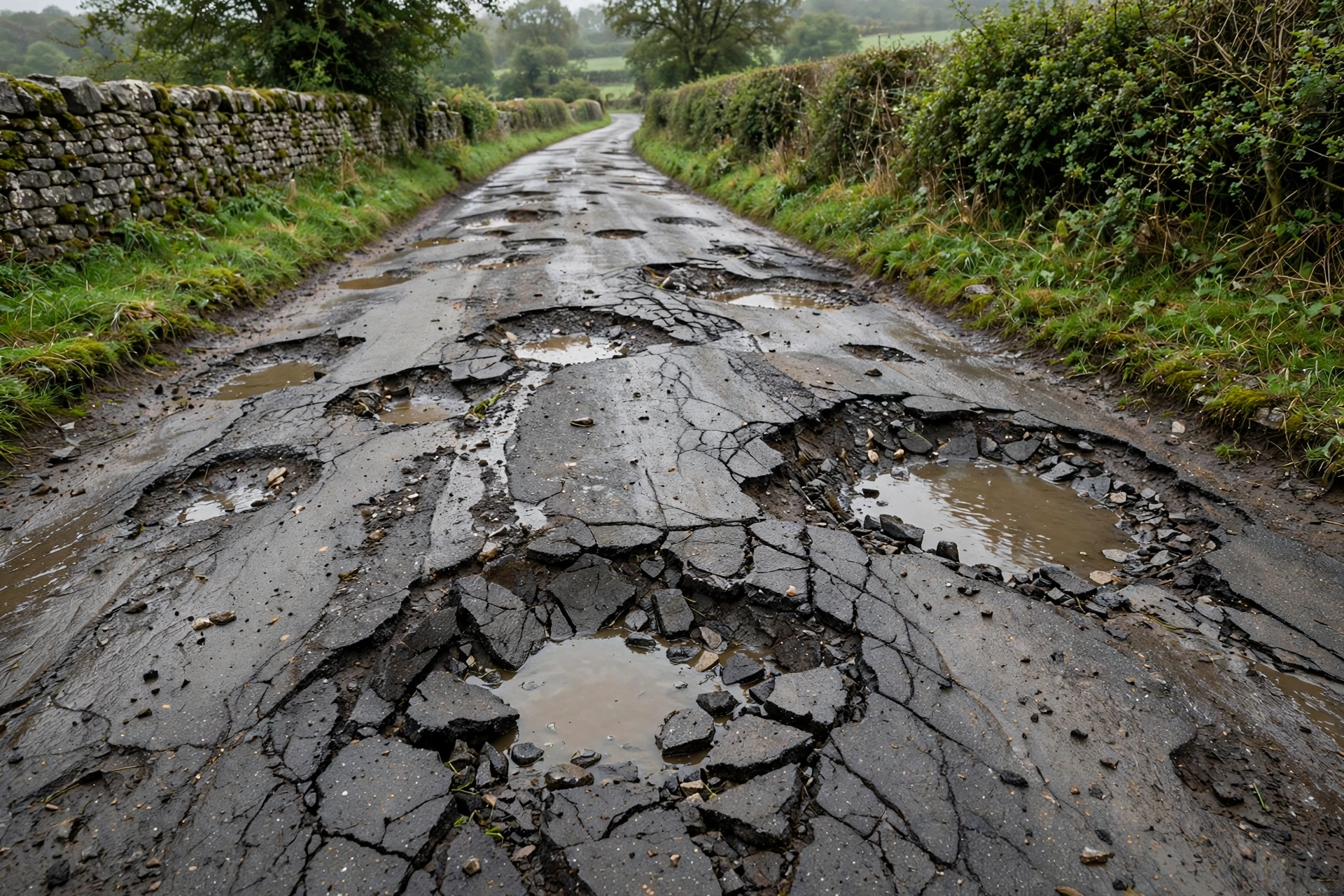
A sudden jolt, a loud bang and the sinking feeling that something may be damaged. That is how the pothole problem announces itself, not as a policy debate but as a physical shock — and the bill that follows is the reason it will not go away. In 2025, RAC patrols attended 26,048 pothole-related breakdowns, a rise of 15% on the year before, according to figures published by the RAC in February 2026. That is an average of 71 drivers a day left stranded by damaged shock absorbers, broken suspension springs or distorted wheels — 3,345 more than the 22,703 recorded in 2024, and above the RAC's long-term annual average of 25,309.
The RAC estimates that a repair for anything more serious than a simple puncture now costs up to £590 for a typical family car, based on its garage data. A 2025 survey by road safety charity IAM RoadSmart found drivers paid an average of £320 for pothole-related repairs in 2023-24, with 5% spending more than £1,000. For people who depend on their car for work, for caring responsibilities or for getting children to school, losing a vehicle even for a short time disrupts daily life. For cyclists and motorcyclists, potholes carry a greater risk still, because a sudden dip or broken surface can cause a fall with serious consequences.
The RAC believes there are now more than one million potholes across the UK, and that drivers in England and Wales encounter an average of six per mile on council-controlled roads.
The backlog: £16.81 billion
The reason the same holes keep coming back is the state of the roads underneath them. The Asphalt Industry Alliance's annual local authority road maintenance survey, ALARM 2025, published on 18 March 2025, put the one-off cost of bringing local roads in England and Wales up to scratch at £16.81 billion — a record high. It would take 12 years to clear the backlog at current rates.
The survey, based on information provided directly by the councils responsible for the network, found that only 48% of local roads are in good structural condition, with 15 or more years of life remaining. More than half the network — around 106,000 miles — has less than 15 years of structural life left, and one in every six miles, 34,600 miles, has less than five years left. Roads are resurfaced, on average, just once every 93 years. In 2024-25, councils filled 1.9 million potholes at a cost of £137.4 million.
"Over £20 billion has been spent on carriageway maintenance in England and Wales over the last decade," said David Giles, chair of the Asphalt Industry Alliance, when the survey was published. The money has gone largely on filling holes rather than renewing surfaces, and the backlog has kept growing regardless.
Drivers: the bill, and the safety risk
Garages across the country report a steady stream of vehicles damaged by poor road surfaces. Tyres are the most common casualty, but suspension, steering and wheel damage are also frequent, and repairs can quickly become costly. For older cars, a major repair caused by a pothole can raise difficult questions about whether the vehicle is worth fixing at all.
Safety runs alongside cost, and it is the stronger argument. Drivers who swerve suddenly to avoid a pothole can put themselves and others at risk, especially on busy or narrow roads. At night or in heavy rain, potholes can be almost invisible until it is too late to avoid them. Cyclists are particularly vulnerable: a wheel caught in a deep pothole can throw a rider from their bike, and the consequences on a busy road can be severe. Motorcyclists face similar risks, as do pedestrians who may trip on broken pavements at the edge of damaged roads.
Councils: patching today against resurfacing tomorrow
Councils are responsible for most local roads, and they face difficult choices about how to spend limited budgets. Resurfacing a whole road is expensive, so many authorities focus on patching individual potholes as they are reported. A patch on a worn-out surface can be followed by new potholes nearby before long, which is why drivers often complain that a repaired pothole soon reappears. Planning resurfacing programmes over several years, rather than reacting to the worst damage each year, is what turns a patchwork of repairs into a smooth new surface — but it needs funding certainty councils say they do not have. The government has put £1.6 billion into local road maintenance in England for 2025-26, including a £500 million uplift, and the Asphalt Industry Alliance argues budgets need to more than double for the next five to ten years to clear the backlog.
Engineers: why roads break, and what lasts
The third view belongs to the engineers, and it starts underground. Water seeps into small cracks in the surface, freezes and expands, and then thaws, gradually breaking the road apart. Heavy traffic, especially from large vehicles, adds to the strain, while ageing surfaces that have not been fully resurfaced for many years are more vulnerable to damage. Where a road has reached the end of its life, repeated patching stops being a repair and becomes a holding measure; the fix that lasts is proper resurfacing of the worn-out surface. Better drainage can reduce the water damage that causes many potholes in the first place. The engineers' point, in short, is that a pothole is rarely a single defect. It is a symptom of a surface, a drainage system and a maintenance history, and treating the symptom without the cause is why the same stretch of road keeps failing.
The one step: report it, then claim on the record
Until the longer fix arrives, there is one step that turns a driver's frustration into something a council must answer — and it has to be done in order, while the evidence is fresh. Photograph the pothole itself, and photograph the damage to the tyre, wheel or suspension. Note the exact location and the date and time. Report the pothole to the council responsible for that road. Then keep the repair quotes and receipts to submit with the vehicle-damage claim.
Many drivers try to claim compensation from the council responsible for the road, but the process can be slow and uncertain: councils may argue that they were not aware of a particular pothole, or that it had already been scheduled for repair. Average council payouts were £390, against an average repair bill of up to £590 — so even a successful claim can leave a driver £200 out of pocket, and without the record the claim has nothing to stand on.
Drivers can reduce the risk by staying alert, keeping a safe distance from the vehicle ahead so potholes can be seen in time, and slowing down on roads known to be in poor condition. Checking tyres regularly, including pressure and tread, also helps, because a well-maintained tyre is better able to cope with uneven surfaces. That single sequence — photograph, note, report, keep — is the step that connects the driver's bill to the council's duty, and it is the only part of this debate a driver can control from the roadside.