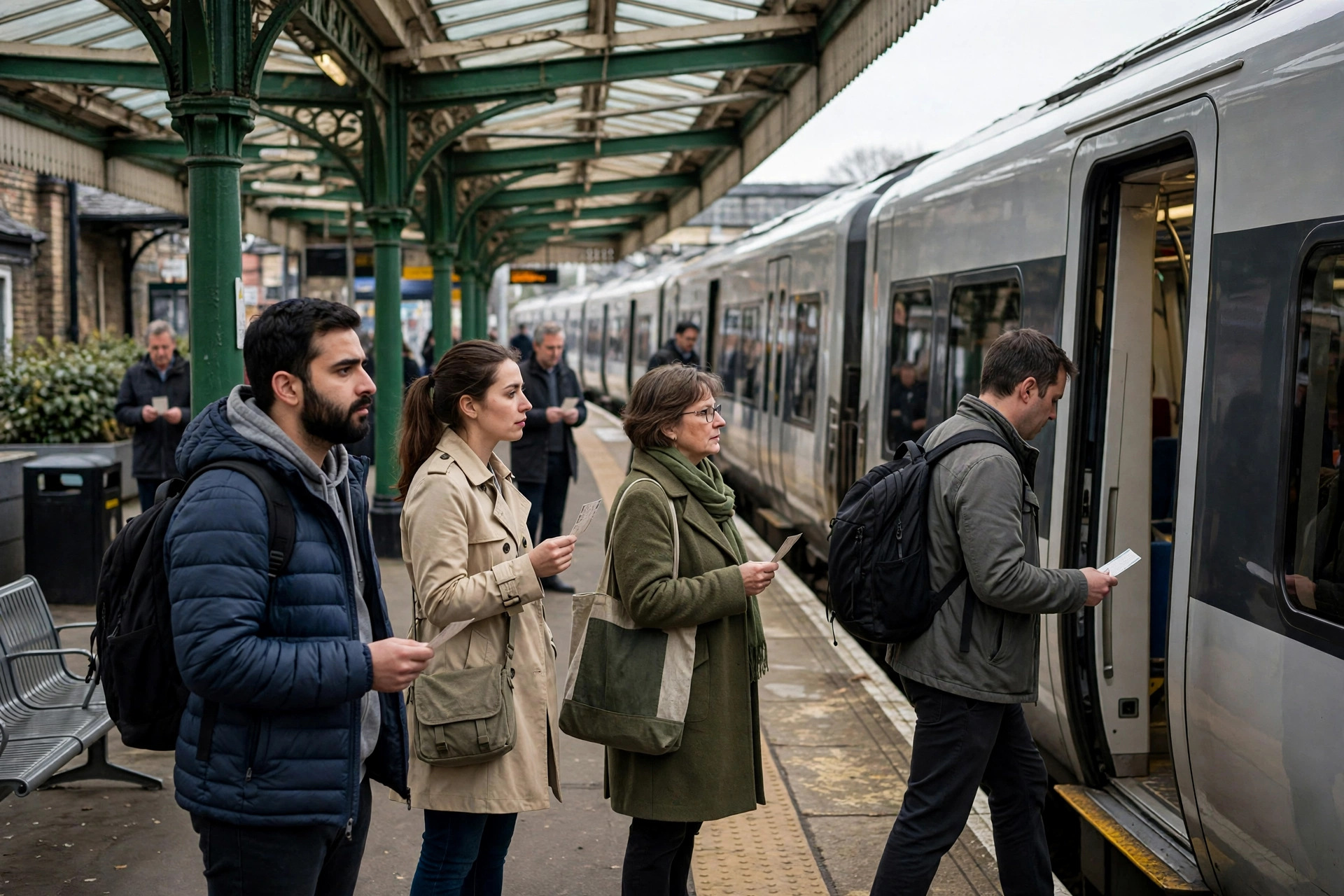
On 23 November 2025, the Chancellor and the Transport Secretary announced that regulated rail fares in England would be frozen for the first time in 30 years. The freeze took effect on 2 March 2026 and runs until March 2027. It saves passengers £600 million in 2026/27 across more than a billion journeys, according to the Department for Transport. Chancellor Rachel Reeves said at the time: "Next week at the Budget I'll set out the fair choices to deliver on the country's priorities to cut NHS waiting lists, cut national debt and cut the cost of living. That's why we're choosing to freeze rail fares for the first time in 30 years." Transport Secretary Heidi Alexander added: "We all want to see cheaper rail travel, so we're freezing fares to help millions of passengers save money."
That is the announcement, sourced and dated — and it is worth stating plainly, because it is unusual: a cost that usually rises, held still. The Office of Rail and Road has since measured what actually happened: regulated fares across Great Britain changed by minus 0.1% in 2026, against a capped rise of 4.6% the year before.
What the freeze covers — and what it does not
The freeze covers regulated fares in England: season tickets, peak commuter returns and off-peak returns between major cities. These are the tickets regular travellers rely on, and they make up about 45% of all fares by value. For a commuter buying a season ticket, or a family planning off-peak trips, the frozen price is the price they pay — no increase at all during the freeze year.
What it does not cover matters just as much. Unregulated fares are set by operators and can still change. Advance fares, often the cheapest tickets for a specific train, fall into this category: their prices vary with demand, time of booking and route, so a passenger who usually buys in advance may still see prices move even while regulated fares stay put.
What the freeze is worth on real routes
The Department for Transport published three worked examples when it announced the freeze, each for a commuter travelling three days a week on a flexi-season ticket. The saving over a year is £315 on Milton Keynes to London, £173 on Woking to London, and £57 on Bradford to Leeds. The department said commuters on the most expensive routes would save more than £300 a year.
The same pattern shows on a single journey. On London to Manchester, the regulated Off-Peak Single is £76.30 and the Off-Peak Return £107.10 — both frozen at their March 2025 level. But the Advance single on the same route, unregulated, starts from £15 when booked 12 weeks ahead and rises as the train fills, while the Anytime single starts from £200. Two households can therefore be living through two different versions of the same freeze: one whose season ticket has not moved a penny, and one whose advance fares keep climbing. The freeze would have been a 5.8% rise under the old formula — July 2025 RPI of 4.8% plus the long-standing one percentage point uplift. That is the increase passengers avoided.
March 2027: the decision now due
The freeze ends in March 2027, and the decision about what replaces it now sits with the Transport Secretary and the Chancellor. The Budget on 28 October 2026 set aside no funding to extend the freeze, and the Department for Transport has said no decision has yet been taken on fares for next year. Which? reported after the Budget that the freeze "will not be extended, meaning train travellers should prepare for higher ticket prices from April 2027".
If the old formula returns, the size of the rise is already calculable. July 2026 RPI was 3.2%, so RPI plus one point would mean a 4.2% increase in March 2027. The Campaign for Better Transport has put figures on what that would mean for annual season tickets into London: £314 more from Southampton Central, £259 from Brighton, £246 from Reading and from Basingstoke, £219 from Chelmsford and £202 from Guildford. None of those rises is decided yet — the decision is due before March 2027, and it is the Transport Secretary's to make, with the Chancellor deciding the funding in the Budget. But the direction of travel is now clear: the freeze was a one-year measure, and without new funding it ends.
There is a second question hanging over the same date. Government papers put before peers as the House of Lords examines the Railways Bill show ministers considering "greater pricing flexibility" on longer-distance routes, moving away from prices set by traditional peak travel periods. What is confirmed is that the Railways Bill will give Great British Railways, the new publicly owned body being created to run the railway, the tools to reshape the fares system.
What passengers actually want
Price is only the start of what matters on the railway. A train that arrives on time, with enough carriages, makes commuting workable. A service plagued by cancellations forces people to leave earlier, miss connections or work from home when they would rather be in the office. Peak trains on busy routes can be standing room only, and passengers who have paid for a season ticket understandably expect a seat.
The ticketing question is the one passengers raise most consistently. Advance, off-peak, anytime, super off-peak, split tickets and railcards all offer different prices and conditions, and the cheapest option is not always obvious. Passengers who buy the wrong ticket can face penalties, even when they made an honest mistake. Many want a system where the best fare is easy to find, without needing to understand every rule.
Split ticketing illustrates the problem. In August 2026, a family of four travelling from London to Manchester saved £84.40 by using Trainline's SplitSave option, buying separate tickets for parts of a journey while staying on the same train. A fairer system, passengers argue, would price the journey, not the knowledge of how to game it.
Flexibility is increasingly important. Hybrid working means many commuters no longer travel five days a week, and traditional season tickets, designed for daily travel, may not suit someone travelling two or three days a week.
What to check before the freeze ends
Before March 2027, the check to make is a personal one: which of your own tickets are regulated and frozen, and which are unregulated advance fares that can still move? That distinction is what decides whether your own fare actually stays put. Then check whether the fare you pay is still the cheapest fair price for the journey you actually make — whether a flexible ticket suits a two- or three-day week better than a traditional season ticket, and whether you are claiming the delay compensation you are entitled to. The freeze holds regulated fares in England until March 2027. What replaces it will be decided before that date, by the Transport Secretary and the Chancellor — and the 4.2% figure hanging over the decision is the number to watch.